Showing posts with label Not a Review. Show all posts

Wednesday, 31 July 2013

Lionsgate Feature

I wrote this feature during fun work experience at Lionsgate. They were trusting enough to let me write a feature on maths films for them, as part of promotion for the fifteenth anniversary release of Darren Afonsky's 'Pi', so that was pretty cool. The screenshots of the movies are remarkably similar, the maths movie is a genre that has repeatedly tread across familiar terrain.

HEY, THERE’S A PATTERN HERE
A guide to cinematic mathematics


Films that revolve around numbers can usually be condensed into two types; the unstable genius movie and the maths thriller movie. We’re all familiar with the brilliant mathematical whizz manically jotting formulae on a blackboard. He’s (he is seldom a she) the one who is deeply damaged, socially inept or suffering from a severe mental illness. He solves something ground-breaking and influential, or simply shows his awe-inspiring skills. He is more often than not, working or studying at the Massachusetts Institute of Technology (MIT) in Boston, or has a disturbed parent that has studied there. He will not be a genius whilst being happy and stable, and if he has a mental illness minus some form of exceptional ability, he will probably be taken out of the equation.

The link between genius and mental disorder is one that has been hackneyed in films involving mathematics, and this could arguably be a critique of the genre. Regardless, many have been original and auspicious hits, worthy of celebration. To honour the fifteenth anniversary of 'Pi', the compelling debut feature from the prolific Darren Afonsky (Black Swan, Requiem For a Dream), in a definitive Blu-Ray package, we have taken a look at several films that feature numbers, including ones that do and don’t add up.

Rain Man (1988)
“Let’s play some cards.”

Callow Charlie Babbit (Tom Cruise) discovers his father has died and given his multi-million dollar estate to his other son, autistic savant Raymond Babbit, who Charlie was previously unaware of. The most memorable part of this Oscar winning film is the scene where Raymond (a wonderful Dustin Hoffman) counts the number of toothpicks that have fallen to the ground by just a glance. His photographic memory means he has memorised all numbers and addresses in the phone book, and he can work out complicated sums in his head. Although 'Rain Man' was a quality piece of film-making for its day and boasts a remarkable performance, it has clearly contributed to the notion that those with autism are generally gifted. This is a Hollywood, rose-tinted representation of one with the developmental disorder, and the most famous. The idea that autists are savants is one perpetuated by such constructions. The film has a positive reputation as a warming film, but from another perspective it is patronizing and assuming. Raymond is a nuisance to his brother Charlie until he discovers he can win him money in a casino.

Good Will Hunting (1997)
 “My boy's wicked smart.”

Modern American classic 'Good Will Hunting' is perhaps the most iconic maths movie. This feel-good psychological drama, co-scripted by and starring childhood friends Matt Damon and Ben Affleck, earned them two Academy Awards and was actually successful when 'Titanic' was sinking most of its competition. Damon plays 20 year old Will Hunting, a working class maths genius who works as a janitor at MIT. He is discovered and nurtured by award-winning maths professor Gerard Lambeau after anonymously solving a complex equation on a blackboard. His self-destructive nature and disinterest in excelling leads him to psychiatrist Sean Maguire (Robin Williams). What made this such a hit is the charisma and understated performances from Williams and Damon, and how they effortlessly conveyed one of the most emotionally involving friendships in cinema without being irritatingly sentimental. The conventional narrative and lesson in self-improvement could have created a saccharine and overly idealistic result. Yet, Gus Van Sant’s ('Milk', 'Elephant') treatment of Wills growth is organically developed and paced, as is the spark between him and Harvard student Skylar (Minnie Driver). A quality piece of enjoyable mainstream fare that was always bigger than the sum of its parts.

 The Cube (1997)
“I’m not dying in a fucking rat maze!”

Sharing the same math thriller sub-genre as 'Fermat’s Room' and 'Pi', The Cube is a gripping maths horror and the first in a series of three. The premise is a group of strangers who wake up in a cryptic structure with no knowledge of how or why they got there, an idea rather similar to the 'Saw' films. It won the 1997 Toronto Film Festival prize for ‘Best Canadian First Feature’. Quentin is the central protagonist, and along with six other unfortunate people, must use his ability to quickly work out how to get out of this maze of interlocking cubes, or they will all die from dehydration. There are traps set, as they soon discover when witnessing several gruesome outcomes. The acting is impressive considering the minimalist set, yet the dialogue and characters are a tad commonplace.

Pi (1998)
“Everything can be understood in terms of numbers.”

A striking debut feature from accomplished director Darren Aronofsky, ('Requiem for a Dream' and 'Black Swan.') 'Pi' proved his huge potential and his ability to portray madness in a riveting and original way. It focuses on Max Cohen (Sean Gullette, who helped the director and producer write the story), a haunted genius mathematician withdrawing from the world in the walls of his squalid NYC flat. He sees numbers everywhere and believes all matter in the universe can be explained mathematically. He is seeking out a pattern in man’s largest productions of ordered chaos: the stock market, and discovers a Hebrew number which may hold the name of God. Imminent discovery is interlinked with the loss of sanity, and the boundaries between psychosis and solved mystery become unclear. His pursuit leads to severe headaches, blackouts, hallucinations and tremors. Filmed using eery black and white cinematography and with a hypnotic, pulsing score, Pi is a successful vision of a paranoid nightmare.

A Beautiful Mind (2001)
“In competitive behaviour, someone always loses.”

Ron Howard’s rather syrupy and (highly) fictionalised biopic stars Russell Crowe as the real life mathematician John Forbes Nash. Nash did his revolutionary work on ‘game theory’ in his early twenties, and his schizophrenia cut his career short. The film condenses 50 years of Nash’s life into 135 minutes and focuses largely on his illness and his relationship with his devoted wife Alicia (Jennifer Connelly). It begins from his arrival at Princeton as a young arrogant maths graduate, and ends with him receiving the Nobel Prize aged 64 from an exuberant academic world. Paul Bettany shines as Nash’s quirky, alluring English roommate and Russell Crowe gives a solid but not staggering performance as a gibbering and nervy man losing his grip on reality. There is at least an attempt to explain his famous theory, albeit done so in a simplistic manner.

Proof (2005)
“Sometimes in my head I think it works, and then, sometimes I just think it’s crazy.”

One year after 'A Beautiful Mind' was released came this fair and familiar story told through the flashbacks of the central protagonist Catherine (Gwyneth Paltrow). Anthony Hopkins plays her recently deceased father, who was an immensely intelligent but mentally ill figure. Catherine has inherited his skill and potentially his mental state. Talented and charming maths geek Hal (Jake Gyllenhaal) is her love interest, and is after her father’s papers that may reveal a precious mathematical proof constructed in a rare moment of lucidity. Catherine insists the work is hers and must prove it, as well as affirm her sanity to the audience and to her sister. An emotional drama rather than a study of science, where Hopkins was criticized for his sketchy performance and many took to be a less than satisfactory alternative to the David Auburn’s Pulitzer Prize winning play that is is based on.

Moneyball (2011)
It’s about getting things down to one number. Using the stats the way we read them, we’ll find value in players that no one else can see.”

The stereotypical underdog tale was given a well-received, creative spin in this baseball statistics film that sports a rather incongruous yet winning cast of Brad Pitt, Philip Seymour Hoffman and Jonah Hill. The ins and outs of baseball is as alienating to British audiences as another language, but luckily 'Moneyball' is about the sport the same way that 'The Damned United' was about the specifics of football managing, and 'The Social Network' was about web development. Whilst the aforementioned films focused on the drama between the lead protagonists, 'Moneyball' centres on the working relationship between Oakland A's general manager Billy Beane (Pitt) and young, inexperienced Economist Peter Brand (Hill), who Beane hired to reconsider the team's game approach. It's based on the true story of how the Major League Baseball team upset the game’s odds in the 2001-2002 season, and using statistical models, placed together a team of misfits to compete. With a razor sharp script and a great performance from Pitt, 'Moneyball' is a fine example of high class Hollywood fare.

Fermat’s Room (2007)
“Do you know what prime numbers are? Because if you don’t, you should just leave now.”

Spain is an expert on the horror and thriller genre, as most film buffs will be aware, leading America to frequently imitate its exports. There’s Guillermo del Toro who gave us 'Julia’s Eyes', 'Pans Labryrinth' and produced 'The Orphanage'. Jaume Balagueró and Paco Plaza Ángela’s frankly terrifying highlight of the found footage genre, 'Rec', Almodovar when he decides to dabble in psychological thriller ('The Skin I Live In') and the list goes on. 'Fermat’s Room' is a Spanish thriller that doesn't quite compare to the brilliance of the former films, but is sleek and stylish nonetheless. Maths experts are trapped in a room that is closing in on them, and they must quickly work out arithmetical conundrums to stop the walls moving, as sent by their kidnapper. Oddly the scenario reminded this writer of Indiana Jones trapped in a closing room with spikes stuck out of the walls in 'The Temple of Doom', but it’s slightly less ridiculous.

Knowing (2009)
“The Numbers are key to everything.”

Another to add to Nicholas Cage’s increasingly questionable filmography, this Sci-Fi movie received a low critical reception. Cage plays an astrophysicist, at MIT of course, whose son Caleb derives some horrific news about the state of the Earth when his school discovers a time capsule from 1959. It includes a series of numbers written by a young girl named Cassandra, and their patterns are indications to widespread calamities, both in the past and future. Knowing is an overly ambitious merge of maths, science, religion, and disaster films. If someone added together Pi, Signs, Deep Impact, Final Destination and The Twilight Zone, plus more absurdity, the result might look roughly like this.

The Number 23 (2007)
“Twenty-f*cking-three!”

Jim Carrey has shown us how he can do drama just as well as comedy in 'Eternal Sunshine of The Spotless Mind', but unfortunately this film doesn’t reveal such talent. He plays the obsessive, once sane Walter Sparrow who becomes hooked on self-published book ‘The Number 23’ by Topsy Kretts, which reveals how the number has a mysterious and deadly presence. Kretts plays with a concept first outlined by William Burroughs, focusing on the numbers frequent occurrence in historical and cultural happenings. It is far from Jim Carrey’s finest hour. It isn’t entirely his fault, considering it was brought to us by Joel Schumacher. Granted, he directed the hit 'The Lost Boys', but he also directed Batman and Robin amongst other forgettable features.

Wednesday, 24 July 2013

Mathieu Kassovitz Interview: "I'm Dumb as a Fucking Duck".

I had the lucky opportunity to interview Mathieu Kassovitz (Amélie, La Haine, Munich), for Front Row Reviews. It was a bit of a gamble as I received an email from the editor the night before the screening of Kassovitzs' new film, Rebellion, in London, stating the possibility of interview later down the line. I couldn't interview  if I hadn't seen this film, and there were no other screenings we knew of. I might have not even been able to conduct the interview at all. But anyway, sod it, I thought. I wrote a university essay on La Haine and had an Amélie
poster on my bedroom wall for years, so I am taking this chance. I travelled down from Sheffield to London to see the film, and luckily it paid off. 

I got half an hour alone with him and he was lovely, and I was incredibly nervous. It also happened to be my birthday, which was strange. It was difficult to look at him without visualizing him riding on a motorbike with Audrey Tatou clutching his sides and grinning euphorically. He amused me when he was speaking about the professionalism of the French government soldiers who helped them make the film, recalling how he asked them why they didn't smoke and they responded that it simply distracts them from their work. Of course, what other reasons would there be? It's hard to imagine an English person taking that approach, more likely they will light up whilst mumbling apologetically about it being a disgusting habit, and they really ought to quit. I later took part in a group Q and A too, but that was rather brief. 

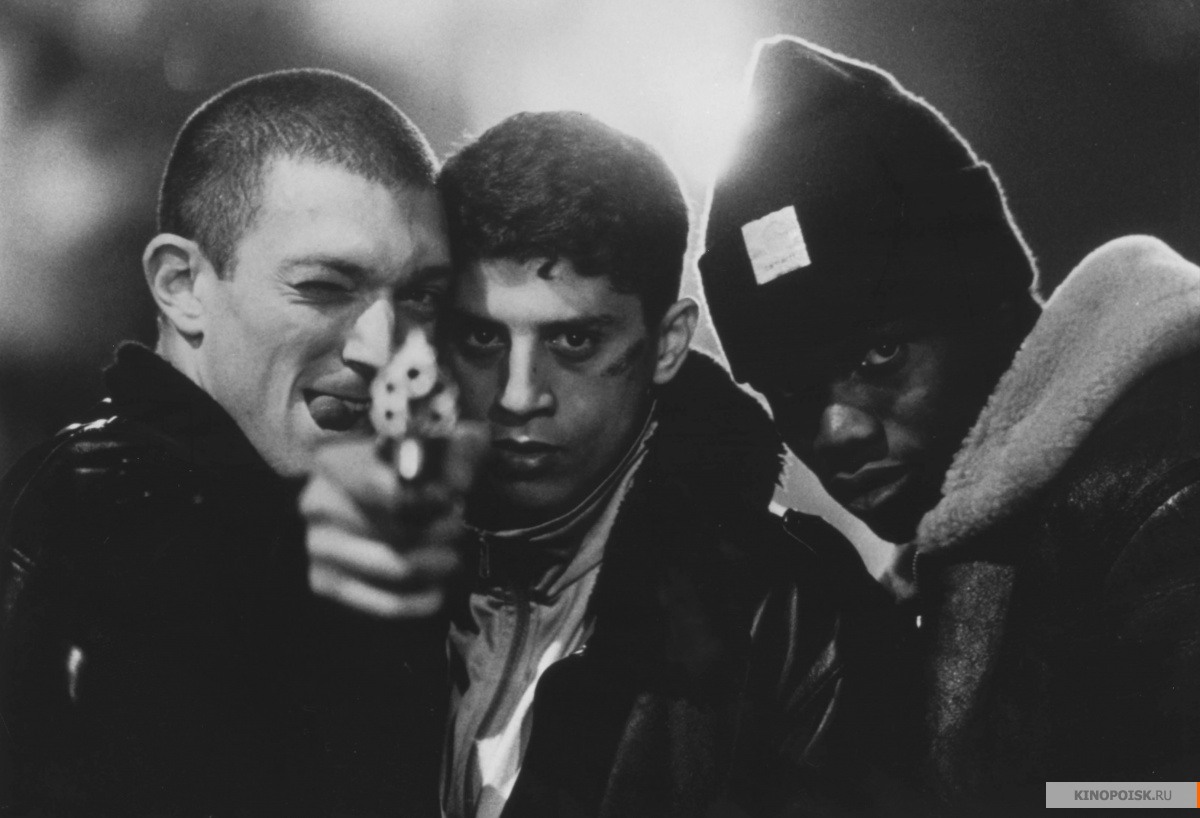
Mathieu Kassovitz is a politically engaged moviemaker. He gained global fame in 1995 for directing the hugely influential cult French classic La Haine, a work that sparked a genre of its own and has film critics and academics picking apart to this day. As an actor, Kassovitz is well known for playing the quirky love interest of doe-eyed Audrey Tatou in the adorable, whimsical romantic comedy Amélie (2001). The success of the film led his face to be in demand by Lancome, and he was asked to model for their scent Miracle, a request he initially thought was to be direct the advert rather than star in it. He has played parts inBirthday Girl (2001) alongside Nicole Kidman and Vincent Cassel and Munich (2005), alongside Eric Bana. Directing is his true passion, however. He “doesn’t enjoy acting” despite his obvious talent for it. He has made films spanning many genres, includingAssassins (1997), The Crimson Rivers (2000) Gothika (2003), and Babylon A.D (2008).


Kassovitz is known for speaking candidly in public. He referred to his Babylon A.D as having parts that were like: “a bad episode of 24”. He is disillusioned with the French film industry. After the Cesar awards where Rebellion only gained one nomination, he posted on Twitter: “Fuck the French cinema. Fuck your shit movies”. His latest film, Rebellion, is a thought provoking and revealing account of French military history set in 1988 on France’s New Caledonia territory in the South Pacific. It tells the real story of a group of Kanak separatists who seized 30 gendarmes in an attempt to gain independence. Kassovitz plays the lead role as Phillipe Legorjus, a negotiator that mediated with Alphonse Dianou, the leader of the rebels. The government resorted to drastic and violent measures, the details of which were kept hushed. The film took ten years to come into fruition.

Now aged 45, after such a huge project, he is taking it easy in LA. He loves the Hollywood industry and intends to continue working within it. Having given his everything to a feature, he fancies: ‘resting his brain and building some muscle tone”. Front Row Reviews were privileged enough to have a conversation with him. In person, Kassovitz is down to earth and exudes friendliness. He appears relaxed in the Odeon Covent Garden bar, with his beer and Rolos, of which he kindly points the bag in my direction. His press schedule is extremely busy but he seems unaware of the fact. I mention I will see him later at a roundtable interview, followed by a Q and A, he responds: “I have a roundtable interview? Oh. And another Q and A? Oh okay, I like Q and A’s.”


When you made this film you clearly felt strongly about making a movie that offered an alternative perspective on a political situation. Why did you choose this particular incident?


That story had a different perspective from the one that we knew about in France. I stumbled upon a book which told a different story, ten years later. The true story was amazing and it was not the one that the government had told us. That was the reason I wanted to make a movie about the different perspective. When you hear a story and discover there is another reality, that’s part of the reason you want to make movies, to show something that isn’t known. Movies can do that.


So the story was news to you also?


It was news for me too, I was surprised. I knew the official story, where nineteen guys were killed and got what they deserved. We didn’t know that story and it’s a very important part of our history. We didn’t know, because we had been lied to.


You play an incredibly passionate and dedicated negotiator. Did working directly with the real negotiator, Phillipe Legorjus, help kindle passion for the role?


It’s not so much passion, it’s more professionalism. These guys are very well trained, they are very professional. They put themselves in very dangerous situations on a daily basis, they don’t let emotions take over because they can’t afford them to. They have to make split second decisions and make the right one. They don’t smoke, when you ask them why, they say because it distracts them from what they have to do. Meeting him and talking to him about his profession and what he experienced gave me the tone for the character. Just seeing how he was a person, well-mannered and polite but doesn’t express much, helped me with the character.


Did you have special training?


Yes I worked with Legorjus and other military supervisors. We worked with other guys from the same team, also from the police and the military. To make it professional we had various people to help us create that reality. Of course, it was very important to be accurate as to how these people worked together so that we could understand what went wrong.


How do you choose your roles?


It depends on different things. The director, the script and the timing. My priorities are still about directing. Right now I have no movie that I have to do as a director, so I’m being an actor.


Amélie paved the way to be a romantic lead but you haven’t really gone down that road, even though that may have been the easiest route. Many actors may have been typecast. Do you like to seek out controversial topics?


Not really, as an actor I don’t care really. I’m not very much into acting. When I’m offered movies that are a little too good, I back off, I don’t want to work that hard. I love directing, but I don’t really like being an actor. I don’t enjoy it.


Did you enjoy acting in Rebellion?


It was part of the direction, it was one less actor to deal with. I could make sure that actor wouldn’t fuck with me as a director.


Woody Allen is famous for only watchi
ng his films once after production. Do you ever re-watch your films and think about how you could have improved?

I stumbled across La Haine the other day on TV. I was with a friend and we started to watch it, it was funny. But it is very painful to re watch films. I like to do it for the DVD and Blu Ray release, when you have to re watch the movie and give commentary, that’s usually the last time I see my films. You see it so many times before its finished, you’re a little disgusted by it. You don’t want to have to deal with it anymore. And it’s done. But it’s good to look over work, I don’t do it that much but I should.


La Haine was a massive success, do you still feel the pressure from this when making other films?


No, because La Haine was such a phenomenon by itself, which I’m not really responsible for. It was the right time, the right moment. Movies like that come along very seldomly, you cannot do it again. If it was just my genius then I would have done it again, but I can’t do it again. I could have done La Haine two. But I did science fiction, I did horror, so I don’t like to do things again. I like to try different things. It’s like being a romantic actor. If you know you are good at something, either you keep on doing it and enjoy it as much as you can, or you can challenge yourself a little bit. You can say if I can do it and have done it, perhaps I should do something else.


What would you say to people that compared Rebellion to La Haine, in terms of its ferocity and its rawness?


I’m proud of it because I think Rebellion is, for me, the follow up of La Haine. It’s not as immature and funny and because it’s a very serious matter and there were not a lot of things to joke about like in La Haine. It’s the same energy, the same kind of cinema, it’s from the same need to make movies. I’m very proud of it because for me it’s almost La Haine two.


You had hassle from the police and journalists after La Haine. Have you had hassle from anyone after Rebellion?


Well, we didn’t get help from the government or the military during the making of the film. I got some people who said the movie wasn’t true to the facts, which I had a couple of fights over. I had a discussion on TV in France with the two real generals and they told me that the movie was a lie, and when I asked them to explain to me where, they explained they hadn’t seen the movie. They hadn’t seen the movie but they know I was lying. Of course, it’s had some sort of negative reaction.


Who are your favourite writers? Would you ever do a literary adaptation?


My favourite writers? I’m going to tell you something. I’m dumb as a fucking duck.


I’m sure that’s not true. I’m sure all the academic writers who wrote about La Haine would disagree with you.


Yeah, but I cannot disagree with them because I didn’t read them. No, I’m not good, I haven’t read that much. I always told myself that I would read when I don’t have anything else to do. I stopped reading around 25, because these guys were way smarter than I was. If you want to read Plato when you’re 27/25, he wrote it when he was 25. I don’t want to change my life around this people. I want to live life as I intended to – dumb – I do it my way. When I’m 70 years old and I’ve done everything my way, I will read.


Okay, how about directors then? You’re a huge fan of Spielberg.


I’m a fan of hundreds of directors as I love that job and I love what they do. Sometimes you can love a director for ten minutes in one movie, for one scene, for one shot, for something he will not do again. But I have to admire the guys who can do it again and again and again. Those are the directors I really admire. It’s not just that you can do it once, if you can do it again and again, then that makes you a genius. Spielberg is one of them. He’s been doing it for 40 years. Others are the Cohen Brothers and Scorsese. There are very few directors who are that level of accomplishment. I believe that good directors make their best movies within the first 3 movies, as that’s when they give everything, and then it becomes a job. That’s why the guys who transcend that and continue making good movies are very impressive.


Do you ever struggle with self doubt when it comes to your work, and how do you push through it?


You have a schedule. Your first AD tells you ‘hey hey! Stop complaining! Go to work!’ You have doubts every day, all the time, 24/7. Tomorrow you have to shoot that scene, you don’t know if it’s going to work, you just do it, put it together.


And hope for the best?


Exactly.


You grew up in a film family. Your mother was an editor, and your father was a director. What was that like, did it set the path for what you were going to do?


That was great because my father came from Hungary in ‘56 when the Russian Revolution took over Hungary, and he escaped and came to Paris in the ‘60s. You could go to Café de Flore and there were jazz players and Jean Paul Sartre, and Simone de Beauvoir and the biggest intellectuals in the world. He came from a communist country and when he saw all that culture, he made documentaries and he became a director. Back in the 60s/70s these movies were hand held. He loved the craft and that’s what he taught me, he taught me that’s what movies are without any special effects, what you can do with a camera and what can you do with no money. I spent all my days in the cutting room with my mum or sometimes on the shoots with my father. I learned the craft, my father is a very good craftsman.


I interviewed Jake Scott, the son of Ridley Scott, and he compared growing up in the family to growing up in a butcher’s shop.


That’s what I always say. If my parents would have been butchers, I would have been a butcher. It’s not a romantic idea of film. I would have been a butcher if my father was a good butcher. He could have told me how to do it right if he could spend the time to transmit the passion with any craft, watch makers or shoe repairs or whatever, as long as your parents teach you the love of it then you’re golden, because all you need is passion. I could have been an astronaut.


If your dad was a good astronaut?


Exactly.


You obviously like to collaborate and you get much enjoyment out of different roles. As you co-edited Rebellion, was it hard to be objective about scenes you were in? Did your co-editor judge your best performance?


It wasn’t about best performance, it was about getting the message through. The character doesn’t act that much as such, the original character is a professional. They cannot let emotions take over. It’s more about, is the focus good? Is the timing good? that one is longer, so it’s better for editing. It’s not really about performance, so it wasn’t a problem. I don’t really see myself, you can’t.


Did you enjoy editing?


Oh I love editing, it’s the best part of making a movie.


As that’s when it all comes together?


It’s when you can really become proud of yourself, you can place all your ideas where you want them to be and see if they work. If it doesn’t, you need other solutions. Editing is where the movie is made, ask all the directors. I edited most of my movies, La Haine. If you are really invested in a project you have to do editing, it’s part of doing a movie.


Wednesday, 6 March 2013

Shame and Martha Macy May Marlene - Gems of 2012

I wrote the following article for the digital magazine Chameleon, which is available on Amazon to download
here  It's rather long, too long, and for that I do apologise.


The past couple of years - particularly for British cinema, which has arguably been going through a renaissance - has produced some seriously substantial film making from established and debut auteurs alike. Personal highlights of recent times have been Richard Ayodade's quirky, beautifully photographed and irresistibly likable debut film 'Submarine'  in 2011. Lynne Ramsay's 'We Need To Talk about Kevin' was another. The Scottish director deservedly returned to the spotlight after eight years, with her exceptionally dark adaptation of Lionel Shilvers novel. As with her previous works, 2002's Morvern Callar and her debut 1999's 'Ratcatcher', 'We need to Talk about Kevin was an eerily disturbing and beautifully formed triumph.' What a travesty for the cinema world it was when Ramsays role in adapting Alice Sebold's novel 'The Lovely Bones' was dropped by Film4 in favour of Hollywood director Peter Jackson in 2009. The result was frankly embarrassing; a saccharine and sentimental atrocity.
It could be said that the most striking of contemporary British film talent has been Turner Prize winning artist Steve McQueen. His directional debut Hunger was an explicit and brutal account of the hunger strikes in Ulster's Maze prison that ended in the death of Bobby Sands, played by Michael Fassbender. The two were reunited in 'Shame.' With the beautiful photography of Sean Bobbitt, Abi Morgan as co-writer ('The Iron Lady', 'The Hour') and a sleek soundtrack by Harry Escott, Shame is a sublime work of art and my highlight of 2012. McQueens artistic background is evident in his eye for composition and fierce visual images. Another memorable feature film was Sean Durkin's impressive debut 'Martha Macy May Marlene' ,an unsettling American psychological drama released in the same year.
My itching curiosity to see Shame led me onto a train from Manchester to Leeds after work in November 2011. I was intrigued as to how a film would depict something as controversial as sex addiction  I had a pass for the International film festival, it was a Friday night and Shame was the closing gala screening, prior to UK release. The coffee shops had shut, but I was early for the screening and had to spend an awkward hour sat in the Slug and Lettuce in a corner with my novel, surrounded by rowdy drinkers and eagerly awaiting 8pm when the film would begin. The train home was delayed and covered in the vomit and drool of a very drunk man. I arrived home at 1am.
It was all worth it. I dawdled out of the screening in a daze, with intense admiration for everyone involved in the film and everything about it. One year on from its release, the suburb  fierce performances have remained under my skin. It has even rivaled Withnail and I as a contender for my favourite film of all time, a significant moment, (still undecided on this one.Those unemployed, quotable heroes have a place in my heart forever).
Shame focuses on Brandon, a handsome and affluent executive living in New York. His particular field is never specified, and is irrelevant. What is important is the fact his office is shiny and immaculate, complete with city views. It is much like his expensive, minimalist apartment, to complete the image of ultimate success. It is just an image, though. The reality is a melancholic, isolated existence driven by his relentless sex drive. He masturbates in toilet cubicles at work several times a day, watches porn whilst causally eating noodles at dinner, and has regular encounters with prostitutes. When Brandon's younger sister Sissy arrives unwanted, out of the blue, her presence threatens to destroy his private space and expose his addiction. Despite her efforts to connect with him, he remains cold and guarded.
Martha Macy May Marlene is a disquieting indie film about a young woman named Martha, and her experiences in a commune she has fled from. The film opens with her running through a forest and hiding behind some growth whilst figures walk past, hunting for her. Shortly after this she is on a payphone, hysterical and only with a vague idea of her whereabouts. Her older sister (Sarah Paulson) comes to collect her, and brings her back to the luxury lake house she shares with her wealthy British husband (Hugh Dancy).
As Martha takes refuge, she suffers from paranoia and disturbing flashbacks of what we later discover has been a two year stay at the farm. She is haunted by her memories, and  struggles to distinguish between what is dream and what is reality. The sinister tone builds gradually. Early flashbacks show a smiling and content Martha, arriving at what ostensibly is a friendly, bohemian commune. As the flashbacks continue, it becomes clear there is something not right. This is a cult run by a creepy man named Patrick (John Hawkes), who renames his followers himself - Martha becomes 'Marcy May'- and dominates them completely. One eery scene shows him perched on a step, simply over looking group sex between his devotees, distanced yet revelling in his power.
Shame and Martha Macy May Marlene have a great deal in common. They are both rich with ambiguity, feature damaged sibling relationships, and characters with dysfunctional approaches to sexuality. In both films, details of the characters' past is hinted at but never explained. In Shame, Sissy tells Brandon over voice mail "we are not bad people, we just come from a bad place". We never find out more, other than the "place" is Ireland. In the latter film, Lucy apologies to Martha for not "being there" enough when growing up, as it becomes apparent their parents were dead or absent. Martha refuses to converse. This means neither film is reduced to melodrama or sentimentality. Both films use dialogue sparingly  but what is said is cleverly revealing. Camera shots can reveal just as much. Close up shots of Sissy and Brandon as she sings her slow rendition of New York, New York in a high class piano bar reveals the sadness behind her bouncy exterior, and the emotion behind Brandon's icy demeanor. As the camera lingers on him, he is clearly moved by her talent as an aspiring singer, and a tear falls down his cheek.
The audience is somewhat distanced during both films. In Shame, many scenes feel utterly voyeuristic. Brandon shares an passionate encounter with his Marianne (Nicole Beharie) , a co worker he has enjoyed a date with and the only character he shares any connection with.The acting is so convincing it feels almost wrong to bear witness to it, but the clear emotion they share is moving.The scene becomes a sad insight into the contrast between sex to fulfill an addiction and sex with real feeling. One explicit group sex encounter he has is deliberately just that bit too long, and it is a relief when we are set free of his expression of emotional pain rather than physical pleasure, and onto the next location. The scenes are relentlessly honest and completely unforgiving. It is a refreshing representation of sex in film.   
Martha Macy May Marlene also conceals as much as it reveals. As it juxtaposes time and space, the present in a spacious lake house in Connecticut, and the past in a cramped farmhouse, We never stay too long in either. We hear and see just enough to  understand the brutality of the cult and the severe effect it has on Martha's mind. The most startling and disclosing scene is when Martha, unable to sleep one night, wanders into Lucy and Ted's bedroom when they are making love, and curls up on the corner of the bed. Lucy has to tell her that 'it's private!' as she is worryingly unaware what the issue is. The film is also equally mysterious. Drama blends with thriller when Martha calls the farmhouse, before hanging up. The phone rings back. Martha experiences paranoid delusions, but does she have a reason to? Are her 'family' able to track her down? The ambiguous ending only continues the mystery.
The relationships between the siblings in both films are complex and equally ambiguous. Martha has disappeared for two years, and intentionally becomes impossible  to contact. She simply tells Lucy that she had a 'boyfriend' who she had split from. They are awkward in each others company. Upon hearing that Ted and Lucy are trying for a baby, Martha erupts into hysterical laughter. Later, during an argument Martha tells Lucy that she going to be a 'terrible mother', a comment we can only guess at the reason for. The relationship between Sissy and Brandon remains intriguing. There are incestuous undertones that only remain a whisper of a possibility, that as a viewer it is impossible to determine.
There are frequent moments when the space they share becomes too close for comfort. When Sissy arrives unwarranted, Brandon barges in on her in the shower with a baseball bat, mistaking her for a burglar. Sissy stands naked, giggling at the situation comfortably, whilst Brandon remains cold. Similarly, later in the film Sissy walks in on Brandon masturbating. Her reaction is to shut the door and laugh, whilst Brandon is simply furious. Sissy yearns for hugs that Brandon will not yield too. In one scene she climbs into his bed and says 'it's cold'. Infuriated, he swears at her to get out. Sissy speaks for the audience when she later says: "I make you angry all the time, and I don't know why".
Sissy and Martha are disconnected outsiders that show their skepticism of the lifestyles that they disturb. Ted and Lucy are proud of their accomplished happiness and wealth. Martha's questions bursts their bubble. 'Why is the place so big?', she asks. Another time she bluntly demands: "Is it true that married people don't fuck?". Likewise, an argument between Sissy and Brandon has him defending himself with the fact he has his own apartment. Sissy's sarcastic response: "You have your own apartment, whoopie fucking shit. And a job, that's amazing, I'm in awe of you" is similar to Martha telling priggish Ted that there are "other ways" to live than to have a career and take pride in possessions.
Neither film resorts to the most obvious turn of events. Brandon's connection with Marianne does not miraculously change him and solve his issues. He may bin his porn stash after their date, but McQueen acknowledges the deep rooted psychological causes of addiction; it cannot be instantly fixed. Ted and Lucy are flawed characters rather than cut out ideals of a bourgeoisie couple. Martha's troubled mind only seems to worsen. 
Durkin and McQueen leave the fates of their characters to be a wonder long after the credits have rolled.

Wednesday, 27 February 2013

Going His Own Way - Interview with Jake Scott

He marvels at Lynne Ramsay, would star Michael Fassbender in his dream project, and is altogether very serious about film. Jake Scott’s directional debut, Plunkett and Macleane, was brutally slashed by the critics. Over a decade later he is biting back with his second feature ‘Welcome to the Rileys’.


Jake Scott is talking about his inevitable attraction to film directing: “It’s a bit like being in a Butcher’s family…Scott’s Butchers and Co.’ His father is, of course, Sir Ridley Scott. Jake was raised in a home rich with cinematic influence and is one of five in his family to take up the vocation. He expresses how fortunate he has been: “Some dads play football with their kids and take an interest in them athletically, or through musical instruments. His way was through film and art, so there was guidance in that sense’

He initially “fought against” the desire to direct, and trained as a set designer, but it’s just something he loves. Had he not gone down this route he would have been a painter. He developed a creative eye by being a successful commercial director for years. Given such a unique background, have the various presumptions and judgements about his abilities been a challenge? He admits it can be a “fucking nightmare! It can fundamentally dismiss anything you might have to offer of your own, you find yourself judged, and react and rebel against that. But I think I’ve managed to find my step now. The main thing is not to be bitter, I think that’s poisonous.”

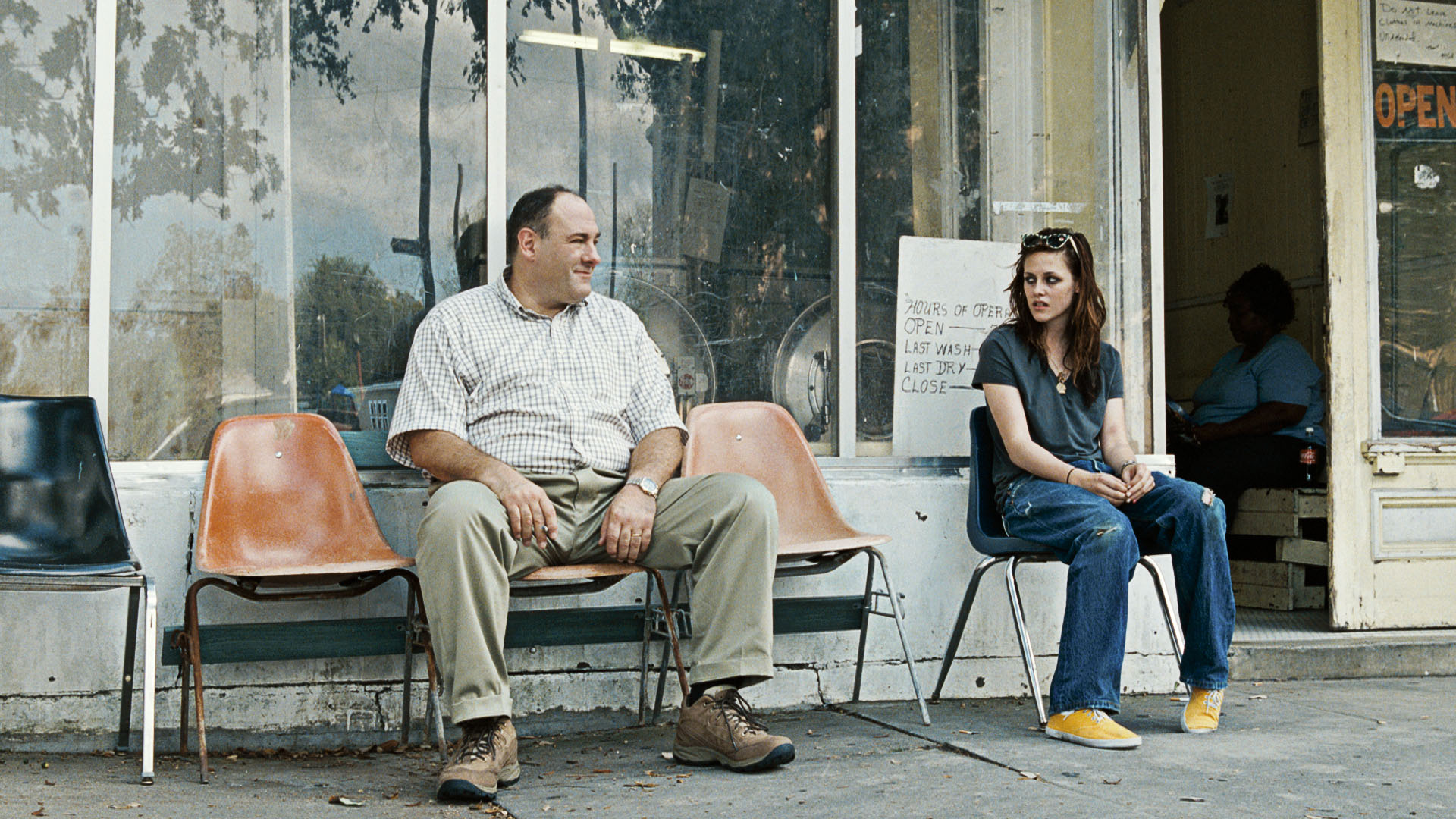
He describes his debut as a: ‘A very flawed film. I wasn’t ready to take on something big. I didn’t know how to deal with the problems and critically they had a right go at me”. His deems his second feature to be more personally rewarding. Welcome to the Rileys is a subtle, understated drama about a married couple struggling with the death of their teenage daughter six years earlier. Doug (James Gandolfini) is a man estranged from his wife and driven to adultery through his loneliness. His agoraphobic wife Lois (Melissa Leo) is confined to the home they share in American suburbia. Doug travels to New Orleans for a plumbing convention where he meets teenage prostitute Allison (Kristen Stewart). She bares a resemblance to the teenager he has lost and the two of them form a platonic bond. Doug becomes fixated, borderline obsessed, with helping her, as if to find some form of closure for his endless suffering.


The characters drew Scott to the script: “As a character study I thought it had a lot of potential. People often assume that in the mid-west of America people attend shrinks all the time. The reality is that many ordinary people must face such tragic circumstances alone.” Ordinary people dealing with impossible events is so endearing because of his extraordinary upbringing. He admits he’s had: “An unusual life that is almost removed from reality’ and has “witnessed things that are really amazing. In some ways, the more grounded and based in reality those struggles are, the more I’m drawn to it”. There is a total absence of judgement for any of the characters. He says he: “Needed to tell the story without any, and was trying not to ask the audience for any sympathy.” He wanted to give a realistic insight without sentimentality.

The cast had the freedom to improvise and would explore possibilities on set before filming. “It was a different way of working for me, and quite an exposed way of working”. Scott had to deal with three strong styles of acting: “James is a method actor, arriving on set prepared and delving deep into character. Kristen is not professionally trained and works with her instincts instead, which, for her strong and challenging role, worked in her favour.” Kristen Stewart was hired pre Bella-Swan-era and Scott was unaware of her tendency to twitch. He found her twitchiness to be appropriate for the role: “A lot of the young prostitutes are like that, they are very uncomfortable in their own skin.” Melissa is a very experienced stage and theatre actor, who was always very level and discerning. Rather than trying to cope with this, you had to work with it, and it worked well”.

Has he formed is own style and voice now, through this second feature? Will he continue to produce character-based films? “I have definitely found my footing, but it doesn’t mean I wouldn’t consider doing a thriller, but I am drawn to this sort of material and I think I will avoid anything with too defined a genre.” Who and what inspires him? “Filmmakers who are daring” he responds. “Steve McQueen is a brilliant director. Lynne Ramsay is also a brilliant filmmaker, to do these films takes a lot of tenacity and discipline and commitment. These directors have a defined and clear voice. I always marvel at them and wonder where it comes from.” He asserts that “without a doubt” Michael Fassbender is his favourite actor and would star in his dream project. Tilda Swinton is his most admired actress.

His favourite film of all time is Federico Fellini’s 8½, and he is a huge fan of Bergman. Most recently, he was very impressed with Drive: “cinematically, there was nothing new, but the director and the cast made a really unique piece. It was a Western, but built around an emotional connection”. Next on his agenda is a film about Jeff Buckley. He feels: ‘Very connected to Jeff and the tragic story of his struggle. I hope we will be shooting in May in New York. I suppose it’s a Rock n’ Roll biopic, but it is more than that. It’s about a spiritual journey.”

Welcome to the Riley’s is released on DVD on Monday 27th February

 This interview was written for Front Row Reviews by Sarah Holland/ The original interview can be found here

Abi Morgan in Conversation with Jeanette Winterson


On the 12th February at the Cornerhouse cinema in Manchester, Shame co-writer Abi Morgan shared her musings with novelist Jeanette Winterson. She discussed the high and lows of screenwriting, fainting after meeting Meryl Streep, and bonding with Shame director Steve McQueen.

Abi Morgan is one of Britain’s busiest and most established writing talents. She has written across theatre, television and film. In 2002 she was nominated for a Laurence Olivier award for her play Tender, but her real breakthrough was Channel 4′s Sex Traffic in 2005, which won 6 Baftas. For TV, she has adapted Sebastian Faulk’s novel Birdsong, and created BBC’s The Hour.

Film-wise, she adapted Monica Ali’s Brick Lane for the screen, wrote the Iron Lady and co-wrote Shame with Steve McQueen. Shame was voted Front Row Review’s top film of 2012. It is a bold, provocative and beautifully captured film about sex addiction, starring Michael Fassbender and Carey Mulligan. “Why did a nice girl like you from North London go and write about a sex addict?” Winterson asks.

“I met Steve, and there was just a real harmony, we could talk about anything. One of the things we we were fascinated by was the internet and how it has changed how we evolve relationships, and the commodification of relationships, and that led to talking about sex and the people who have got addicted via the internet, to find the intimacy they can’t find in life.”

“We tried to find people in London and no one talked to us because it’s not really recognized as an addiction. In America they love to talk, they recognise it as an addiction. We met some amazing therapists, psychiatrists and addicts. The addicts were like all of us. Steve and I would come away after spending the afternoon with someone who would tell us intimate, torrid mundane details of their life. There would be this silence that would fall over us. Steve would say, “do you ever do that?” and I’d say “sometimes”. Suddenly all these nuanced behaviours that in extreme were addictions, you could see the route of them in yourself, as a man and a woman. Steve brought out the masculine in me and I brought out of the feminine in him. It was a good match.”

They worked on Shame together. “I write, but equally he does this huge transition when it goes to screen. I wrote it in a hotel room overlooking the Hudson in February that went into April. Of the first 100 pages they had of the script, they threw away the first sixty. “Steve got furious one weekend and said “oh it’s rubbish!” I cried in north London, he sulked in Amsterdam and I agreed with him and we started again.

We actually came in at page 61 and started the film there and ran those 40 pages and built on them.” Later, an audience member quizzed Morgan on those lost pages. He asked about the hinted incestuous undertones between Brandon and Sissy that exist throughout the film, that McQueen had previously deflected.

“We have a consensus about it. I know what happened. There was a key scene where you found out and, yes we did cut it. I mean, I’m a blabbermouth, so i could easily be cornered with a drink and tell you, but I won’t. I think Steve feels, and I sort of agree with him, that you can interpret it anyway you want really.”

“Steve is one of those rare directors, he is an artist, literally an artist. He made me raise my game. I liked that. It was really great to work with a director who really believed in his own voice and said ‘I know this script i know the way this film should be’. I really took a leap with him.”

“I think when you do a film about sex it is going to cause some controversy. I don’t think it really did. I think it exposes the sexual appetite not just of men but of women too, and the complexity of a man who cannot have the basic intimacy. You can meet men who are very in love with their wives but they can only have sex with a prostitute, and it’s heartbreaking for all involved.”

She described Michael Fassbender as masculine and charismatic. “He is also hugely tender. He’s a brilliant actor, a very special actor. He’s very exciting to be around because he’s very intelligent and intense but also a huge showman, and you get that in his performance, and that’s just a dream to write for.”


She recounted how The Iron Lady, where Meryl Streep plays Margaret Thatcher, was “really hard to write but actually the stage where Meryrl came on was brilliant, and very exciting. I went to work with her in New York in her very beautiful apartment and I had never met her before. I literally fainted in the lift because i was trying to be so cool throughout the two and a half hours i spent with her that i realised i had been breathing so shallow. There is a photo of me lying in the lift. I found her very daunting to be around. I genuinely think she is one of the greatest actresses in the world.”

Abi Morgan is excessively modest. She admitted “I think most of what i do is a process of failure – i think a lot of good work is about failing – most things you do you fail. I never look at a piece of work and think, bloody good. I i look at it and think fuck, i got it wrong”. Currently she has around seven works on the back burner, including a film about the Suffragettes and an adaptation of Shakespeare’s The Taming of the Shrew, set in 1950s Italy and starring Anne Hathaway.

Fortunately for us, she overthrew her original aspirations to become an actress and chose to write instead.

 This was written for Front Row Reviews by Sarah Holland/ The original piece can be found here.