Wednesday, 24 July 2013

Sheffield Doc/Fest Twenty:The Exorcist – The Fear of God

I covered the 2013 Sheffield Doc Fest this June for Front Row Reviews, which was actually shockingly impressive. I had no idea that it was such a huge festival, as despite being a student in the city I hadn't actually attended it before. It was the premiere for many documentaries such as the prolific and harrowing 'Act of Killing' which won the Audience award, and each documentary finished with a Q and A with the director, making each screening feel like a proper event. On one day I saw four documentaries, being out from 1pm to 10pm. That day I also dragged my friend around with me, who surprised herself by actually being immersed in it. The one I enjoyed the most was probably 'Project Wild Thing', it had the audience in hysterics and grinning ear to ear by the end.

This retrospective documentary marking twenty five years of The Exorcist and presented by Mark Kermode is entertaining and fascinating in equal measure.


The Exorcist made viewers faint, vomit and flee out of screenings. It also made audiences queue for hours in the snow for the chance to see it, and remained showing in cinemas for an astonishing two years. After watching this documentary I was keen to re-watch the film. As I did so, it became apparent to me why it has become one of the highest grossing films of all time and one of the most disturbing. As a young teenager my friend and I just wanted to see what the fuss was about. It was quite dull and relatively uneventful until heads were spinning round and vomit was sprouting out of possessed Regan’s mouth. I found the experience entertaining but underwhelming. At times it seemed comical, almost self-parodying.

Now however, it struck me what a well-made film it is, and how remarkably ahead of its time it was. It is well paced, incredibly well shot and there is an intriguing balance of different approaches to Regan’s state. He mother asks eighty eight doctors for an opinion, and one of them even suggests an exorcism, for psychological effect rather than religious.  Damien (Jason Miller), the priest who is asked to perform the Exorcism has studied medicine at Harvard, and initially tells Regan’s mother to “take her to the best hospital you can find, and leave her there for six months”. Rather than separate traditional Catholicism and more modern approaches, it merges the two together, and the outcome is more convincing and realistic for it. As the director William Friedkin remarks in the documentary: “It’s about a real street in a real town with real people living in it, and upstairs on the third floor is a real little girl who happens to be possessed by a demon”.

This BBC documentary from 1998, presented and produced by Mark Kermode, was made as a retrospective for the twenty fifth anniversary of the cultural movie phenomenon. Cast and crew give humorous anecdotes of the filming experience and recount how it was created, as well as examining the hysteria and controversy that surrounded it. There were rumours of a curse over the making of the film, as a fire broke out on set when nobody was there, an occurrence that is still a mystery. There were nine deaths of crew members and their families over the fifteen months it took to make it. This helped fuel publicity and the fear that surrounded the film, adding to the contention that it contained evil itself and should be banned.

The special effects may seem like nothing special now, but as we discover during the documentary, they took a remarkable amount of imagination and patience to construct. The director remarked: “Today it would be a piece of cake, today they can convince you that the Titanic is sinking. In those days with an optical I could not make you believe that a bed was thumping on its own. It had to happen on the set”. To create the breath in the room when it goes cold, a man had to be employed to refrigerate the room (a man who later died). Four large air conditioners were left on the set overnight, and when the actors arrived the room would be forty degrees below freezing. Conveying emotion was difficult as their faces would be frozen stiff. Ellen Burstyn, who plays Regan’s mother, recalls having to ring an ambulance after she had to be thrown forcefully to the ground repeatedly to create the desired effect. To make the projectile green vomit, a device had to be fitted in an actresses mouth, (who was actually a twenty five year old with the same frame as the twelve year old Linda Blair) full of hot pea soup. To make the penultimate scene where Damien sacrifices himself and plunges down 97 stone steps, a stunt man had to actually do this twice. Each step was lined with rubber. Miller recalls marvelling at this and asking the stuntman how he did it, to which he responded: “Zen. The complete, non-resistance of my body so that it becomes totally relaxed.” Local children had hired out the roofs of their homes and sold tickets so people could see the stunt performed.

Mark Kermode was giving anecdotes in a Q&A after the screening. Kermode speaking about horror film, particularly the Exorcist, seems as necessary to him as breathing. He was obsessed with the film from aged eleven and read all the related literature on it, but didn’t get to see it until he was seventeen, when he had an almost “out of body experience”. He has now seen the film an “unhealthy amount of times” and is friends with the director, an ever changing friendship due to Friedkin’s fiery character. Ellen Burstyn also says in the documentary: “My dear friend Bill Friedkin is a maniac”. Stories were told of him keeping guns on set, to fire when the actors had to look startled. His methods of motivating actors were unusual and created a lot of tension, but they were effective. Here was a man who had made the acclaimed ‘French Connection’ starring Gene Hackman and had his reputation was on the line, Warner Bros was taking an expensive gamble and he was taking a risk, both due to the daring subject matter and the large reliance on a child actor. Warner had approached Mike Nichols (‘The Graduate’) to direct, but he declined due to the latter reason.

Kermode recounted how, after investing $10m dollars in the making of the film and seeing it for the first time, Warner Bros suggested that perhaps they shouldn’t distribute it. After all the time and investment, perhaps it was best just shoved under the carpet. At the first public screening, many were repulsed, and after the credits had rolled the theatre was met with total silence. Initially, the makers thought it would be a complete failure. Of course, it then went on to be nominated for ten academy awards, and winning two. ‘The Exorcist: The Fear of God’ is a documentary that both celebrates a piece of timeless horror cinema but still poses the question of why exactly it provoked, and still provokes, such an extreme reaction. It is a revealing, fascinating and entertaining study. A must see.

4/5

Mathieu Kassovitz Interview: "I'm Dumb as a Fucking Duck".

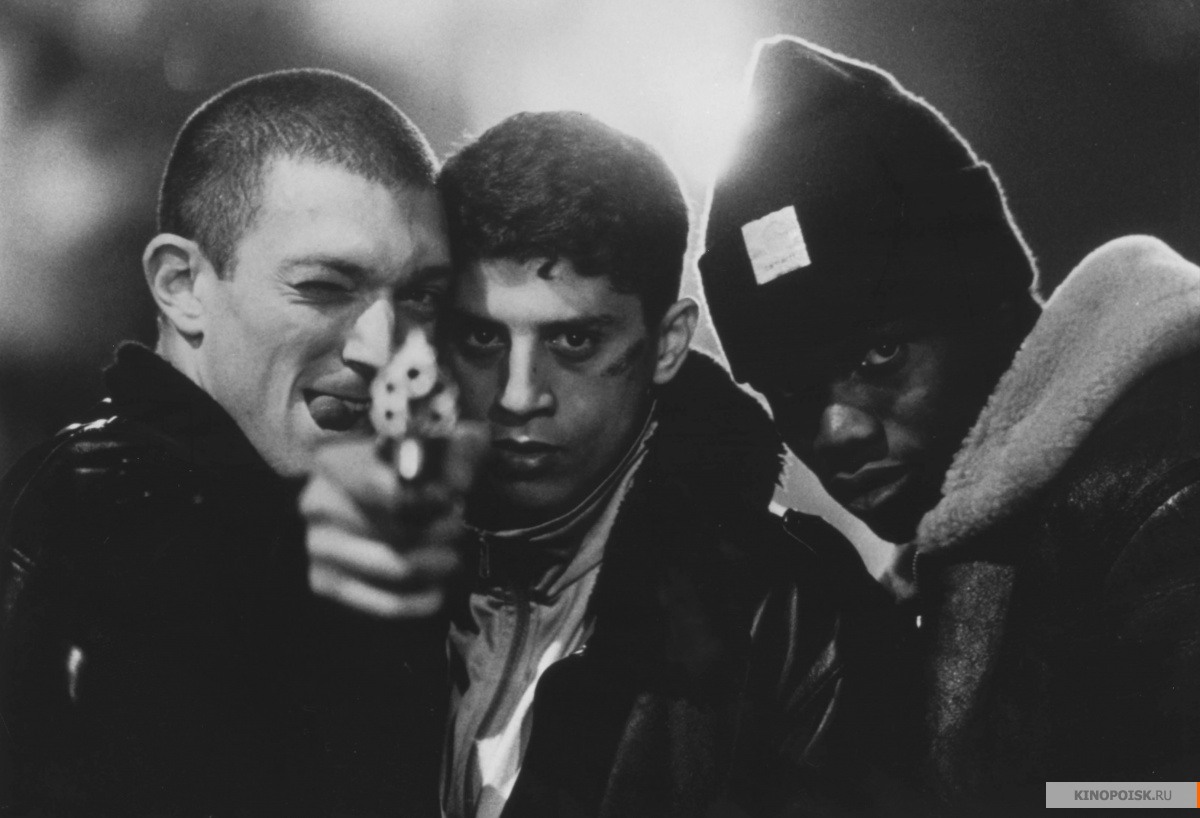
I had the lucky opportunity to interview Mathieu Kassovitz (Amélie, La Haine, Munich), for Front Row Reviews. It was a bit of a gamble as I received an email from the editor the night before the screening of Kassovitzs' new film, Rebellion, in London, stating the possibility of interview later down the line. I couldn't interview  if I hadn't seen this film, and there were no other screenings we knew of. I might have not even been able to conduct the interview at all. But anyway, sod it, I thought. I wrote a university essay on La Haine and had an Amélie
poster on my bedroom wall for years, so I am taking this chance. I travelled down from Sheffield to London to see the film, and luckily it paid off. 

I got half an hour alone with him and he was lovely, and I was incredibly nervous. It also happened to be my birthday, which was strange. It was difficult to look at him without visualizing him riding on a motorbike with Audrey Tatou clutching his sides and grinning euphorically. He amused me when he was speaking about the professionalism of the French government soldiers who helped them make the film, recalling how he asked them why they didn't smoke and they responded that it simply distracts them from their work. Of course, what other reasons would there be? It's hard to imagine an English person taking that approach, more likely they will light up whilst mumbling apologetically about it being a disgusting habit, and they really ought to quit. I later took part in a group Q and A too, but that was rather brief. 

Mathieu Kassovitz is a politically engaged moviemaker. He gained global fame in 1995 for directing the hugely influential cult French classic La Haine, a work that sparked a genre of its own and has film critics and academics picking apart to this day. As an actor, Kassovitz is well known for playing the quirky love interest of doe-eyed Audrey Tatou in the adorable, whimsical romantic comedy Amélie (2001). The success of the film led his face to be in demand by Lancome, and he was asked to model for their scent Miracle, a request he initially thought was to be direct the advert rather than star in it. He has played parts inBirthday Girl (2001) alongside Nicole Kidman and Vincent Cassel and Munich (2005), alongside Eric Bana. Directing is his true passion, however. He “doesn’t enjoy acting” despite his obvious talent for it. He has made films spanning many genres, includingAssassins (1997), The Crimson Rivers (2000) Gothika (2003), and Babylon A.D (2008).


Kassovitz is known for speaking candidly in public. He referred to his Babylon A.D as having parts that were like: “a bad episode of 24”. He is disillusioned with the French film industry. After the Cesar awards where Rebellion only gained one nomination, he posted on Twitter: “Fuck the French cinema. Fuck your shit movies”. His latest film, Rebellion, is a thought provoking and revealing account of French military history set in 1988 on France’s New Caledonia territory in the South Pacific. It tells the real story of a group of Kanak separatists who seized 30 gendarmes in an attempt to gain independence. Kassovitz plays the lead role as Phillipe Legorjus, a negotiator that mediated with Alphonse Dianou, the leader of the rebels. The government resorted to drastic and violent measures, the details of which were kept hushed. The film took ten years to come into fruition.

Now aged 45, after such a huge project, he is taking it easy in LA. He loves the Hollywood industry and intends to continue working within it. Having given his everything to a feature, he fancies: ‘resting his brain and building some muscle tone”. Front Row Reviews were privileged enough to have a conversation with him. In person, Kassovitz is down to earth and exudes friendliness. He appears relaxed in the Odeon Covent Garden bar, with his beer and Rolos, of which he kindly points the bag in my direction. His press schedule is extremely busy but he seems unaware of the fact. I mention I will see him later at a roundtable interview, followed by a Q and A, he responds: “I have a roundtable interview? Oh. And another Q and A? Oh okay, I like Q and A’s.”


When you made this film you clearly felt strongly about making a movie that offered an alternative perspective on a political situation. Why did you choose this particular incident?


That story had a different perspective from the one that we knew about in France. I stumbled upon a book which told a different story, ten years later. The true story was amazing and it was not the one that the government had told us. That was the reason I wanted to make a movie about the different perspective. When you hear a story and discover there is another reality, that’s part of the reason you want to make movies, to show something that isn’t known. Movies can do that.


So the story was news to you also?


It was news for me too, I was surprised. I knew the official story, where nineteen guys were killed and got what they deserved. We didn’t know that story and it’s a very important part of our history. We didn’t know, because we had been lied to.


You play an incredibly passionate and dedicated negotiator. Did working directly with the real negotiator, Phillipe Legorjus, help kindle passion for the role?


It’s not so much passion, it’s more professionalism. These guys are very well trained, they are very professional. They put themselves in very dangerous situations on a daily basis, they don’t let emotions take over because they can’t afford them to. They have to make split second decisions and make the right one. They don’t smoke, when you ask them why, they say because it distracts them from what they have to do. Meeting him and talking to him about his profession and what he experienced gave me the tone for the character. Just seeing how he was a person, well-mannered and polite but doesn’t express much, helped me with the character.


Did you have special training?


Yes I worked with Legorjus and other military supervisors. We worked with other guys from the same team, also from the police and the military. To make it professional we had various people to help us create that reality. Of course, it was very important to be accurate as to how these people worked together so that we could understand what went wrong.


How do you choose your roles?


It depends on different things. The director, the script and the timing. My priorities are still about directing. Right now I have no movie that I have to do as a director, so I’m being an actor.


Amélie paved the way to be a romantic lead but you haven’t really gone down that road, even though that may have been the easiest route. Many actors may have been typecast. Do you like to seek out controversial topics?


Not really, as an actor I don’t care really. I’m not very much into acting. When I’m offered movies that are a little too good, I back off, I don’t want to work that hard. I love directing, but I don’t really like being an actor. I don’t enjoy it.


Did you enjoy acting in Rebellion?


It was part of the direction, it was one less actor to deal with. I could make sure that actor wouldn’t fuck with me as a director.


Woody Allen is famous for only watchi
ng his films once after production. Do you ever re-watch your films and think about how you could have improved?

I stumbled across La Haine the other day on TV. I was with a friend and we started to watch it, it was funny. But it is very painful to re watch films. I like to do it for the DVD and Blu Ray release, when you have to re watch the movie and give commentary, that’s usually the last time I see my films. You see it so many times before its finished, you’re a little disgusted by it. You don’t want to have to deal with it anymore. And it’s done. But it’s good to look over work, I don’t do it that much but I should.


La Haine was a massive success, do you still feel the pressure from this when making other films?


No, because La Haine was such a phenomenon by itself, which I’m not really responsible for. It was the right time, the right moment. Movies like that come along very seldomly, you cannot do it again. If it was just my genius then I would have done it again, but I can’t do it again. I could have done La Haine two. But I did science fiction, I did horror, so I don’t like to do things again. I like to try different things. It’s like being a romantic actor. If you know you are good at something, either you keep on doing it and enjoy it as much as you can, or you can challenge yourself a little bit. You can say if I can do it and have done it, perhaps I should do something else.


What would you say to people that compared Rebellion to La Haine, in terms of its ferocity and its rawness?


I’m proud of it because I think Rebellion is, for me, the follow up of La Haine. It’s not as immature and funny and because it’s a very serious matter and there were not a lot of things to joke about like in La Haine. It’s the same energy, the same kind of cinema, it’s from the same need to make movies. I’m very proud of it because for me it’s almost La Haine two.


You had hassle from the police and journalists after La Haine. Have you had hassle from anyone after Rebellion?


Well, we didn’t get help from the government or the military during the making of the film. I got some people who said the movie wasn’t true to the facts, which I had a couple of fights over. I had a discussion on TV in France with the two real generals and they told me that the movie was a lie, and when I asked them to explain to me where, they explained they hadn’t seen the movie. They hadn’t seen the movie but they know I was lying. Of course, it’s had some sort of negative reaction.


Who are your favourite writers? Would you ever do a literary adaptation?


My favourite writers? I’m going to tell you something. I’m dumb as a fucking duck.


I’m sure that’s not true. I’m sure all the academic writers who wrote about La Haine would disagree with you.


Yeah, but I cannot disagree with them because I didn’t read them. No, I’m not good, I haven’t read that much. I always told myself that I would read when I don’t have anything else to do. I stopped reading around 25, because these guys were way smarter than I was. If you want to read Plato when you’re 27/25, he wrote it when he was 25. I don’t want to change my life around this people. I want to live life as I intended to – dumb – I do it my way. When I’m 70 years old and I’ve done everything my way, I will read.


Okay, how about directors then? You’re a huge fan of Spielberg.


I’m a fan of hundreds of directors as I love that job and I love what they do. Sometimes you can love a director for ten minutes in one movie, for one scene, for one shot, for something he will not do again. But I have to admire the guys who can do it again and again and again. Those are the directors I really admire. It’s not just that you can do it once, if you can do it again and again, then that makes you a genius. Spielberg is one of them. He’s been doing it for 40 years. Others are the Cohen Brothers and Scorsese. There are very few directors who are that level of accomplishment. I believe that good directors make their best movies within the first 3 movies, as that’s when they give everything, and then it becomes a job. That’s why the guys who transcend that and continue making good movies are very impressive.


Do you ever struggle with self doubt when it comes to your work, and how do you push through it?


You have a schedule. Your first AD tells you ‘hey hey! Stop complaining! Go to work!’ You have doubts every day, all the time, 24/7. Tomorrow you have to shoot that scene, you don’t know if it’s going to work, you just do it, put it together.


And hope for the best?


Exactly.


You grew up in a film family. Your mother was an editor, and your father was a director. What was that like, did it set the path for what you were going to do?


That was great because my father came from Hungary in ‘56 when the Russian Revolution took over Hungary, and he escaped and came to Paris in the ‘60s. You could go to Café de Flore and there were jazz players and Jean Paul Sartre, and Simone de Beauvoir and the biggest intellectuals in the world. He came from a communist country and when he saw all that culture, he made documentaries and he became a director. Back in the 60s/70s these movies were hand held. He loved the craft and that’s what he taught me, he taught me that’s what movies are without any special effects, what you can do with a camera and what can you do with no money. I spent all my days in the cutting room with my mum or sometimes on the shoots with my father. I learned the craft, my father is a very good craftsman.


I interviewed Jake Scott, the son of Ridley Scott, and he compared growing up in the family to growing up in a butcher’s shop.


That’s what I always say. If my parents would have been butchers, I would have been a butcher. It’s not a romantic idea of film. I would have been a butcher if my father was a good butcher. He could have told me how to do it right if he could spend the time to transmit the passion with any craft, watch makers or shoe repairs or whatever, as long as your parents teach you the love of it then you’re golden, because all you need is passion. I could have been an astronaut.


If your dad was a good astronaut?


Exactly.


You obviously like to collaborate and you get much enjoyment out of different roles. As you co-edited Rebellion, was it hard to be objective about scenes you were in? Did your co-editor judge your best performance?


It wasn’t about best performance, it was about getting the message through. The character doesn’t act that much as such, the original character is a professional. They cannot let emotions take over. It’s more about, is the focus good? Is the timing good? that one is longer, so it’s better for editing. It’s not really about performance, so it wasn’t a problem. I don’t really see myself, you can’t.


Did you enjoy editing?


Oh I love editing, it’s the best part of making a movie.


As that’s when it all comes together?


It’s when you can really become proud of yourself, you can place all your ideas where you want them to be and see if they work. If it doesn’t, you need other solutions. Editing is where the movie is made, ask all the directors. I edited most of my movies, La Haine. If you are really invested in a project you have to do editing, it’s part of doing a movie.


Rebellion Review

La Haine director returns with a political thriller that fails to meet the standard of its predecessor, yet contains some thought-provoking moments. 


Mathieu Kassovitz earned a reputation as an auteur for directing the contemporary French classic La Haine (1995), which provided a refreshing change to from previous conventional French movies and provided a uniquely daring social commentary of police brutality. Of course, he is also instantly recognizable as Nino Quincampoiz, the eccentric love interest in the quirky romantic comedy Amélie  (2001). After a stint in making more mainstream Hollywood movies he is back to his roots with the controversial Rebellion, a project which has been ten years in the making. He has co-produced, co-written, co-edited in addition to starring in it and directing it.

As a director, Kassovitz seems to feel a certain responsibility to use the medium of cinema to inform and expose, to explore issues that would be avoided entirely otherwise. Rebellion is similar to La Haine in the sense it has been made with similar passion and extensive research, but whilst the latter depicts the chaotic clash of authority between police and lower-class individuals in the ‘banlieues’ outside of Paris, the former uncovers the French government’s brutal treatment of a hostage crisis that happened in 1988. An alternative perspective of the events is given, rather than the one that has been told previously.

Kassovitz adopts the central role as Phillipe Legorjus, the captain and negotiator of a counter-terrorism police unit sent in to settle the conflict on the island of Ouvéa in the French colony of New Caledonia. Kanek activists had seized a police post and 30 hostages in an attempt to gain independence. The film closely documents Legorjus’ gruelling efforts to communicate with the activists, and his ongoing dialogue with Kanek leader Alponse Dianou (Ibabe Lapacas). Legorjus’ work has to come to abrupt halt when he receives orders to abandon peaceful communication from Paris, as presidential elections are imminent and the government are concerned about appearing weak.

Although the performances are convincing and the drama well traversed, the film is not overly concerned with these aspects; the thoughtful message and tragic reality behind them is what dominates. Likewise, the violence exists to enlighten the viewer and provoke thought rather than exist for its own sake as a spectacle. The stylistic tropes feel far more Hollywood-like than in La Haine. The non-diagetic, threatening drum beats feel a bit unnecessary at times as the story itself is gripping enough without requiring such tropes to build tension. The climax also takes a while to be reached, however the finale skillfully resonates a powerfully subtle sadness.Rebellion delicately represents a brutal part of French history and reflects on how politics often reigns over moral integrity and compassion.

3/5

Sunday, 24 March 2013

¡Viva! 2013: Medianeras Review


Argentine director Gustavo Taretto’s offbeat romantic comedy is a charming treat.


This quirky genre-bending rom-com set in Buenos Aries has clear influences from early Woody Allen. It’s two protagonists, Martin (Javier Drolas) and Mariana (Pilar Lopez de Ayala), are perfect for one another but have never met. They share the same worries and thoughts, and their lives are shown in parallel. One will be singing a song on the radio, and Taretto will juxtapose it with the other doing the same. As crucial for any Woody-Allen-esque heroes, they are both riddled with neuroses and existential dilemmas. Both are damaged and depressed, struggling with singledom and isolation.

Mariana is a gorgeous qualified architect recently out of a four year relationship. She has a fear of lifts and a penchant for Where’s Wally books. Her job as a window shopper means she has a collection of mannequins, one of which she talks to and in one odd scene even starts simulating sex with, later to say to it “don’t get any false hopes, it was only sex”. She suffers from urban alienation and muses heavily on the nature of her job: “Sometimes if someone stops to look at the display, I feel like they are stopping to look at me”.

Martin is introduced at the film’s opening, talking in a voice over that accompanies photography of Buenos Aries. This is a homage to the start of Manhattan, (later on, Martin and Mariana are shown watching that film separately, crying) but far from a romantic commentary about a place he loves, he is bemoaning the mismatched architecture and incongruous planning, blaming it for his problems. The director sees it in a more favorable light as he mingles graphic art and charming illustrations of the city with the cinematography, rather like the style in Marc Webb’s  (500) Days of Summer. 

Martin is a hypochondriac and former agrophobe who spends most of his time indoors working as a web designer and being utterly cyber dependent. He has a small dog (the token pet in romantic comedies is one frequent trope that tends to irritate me, but it isn’t a source of too much comedy so it’s bearable), and has never left the country due to his fear of travel. He winds up having a fling with the dog walker that he hires, and attempts internet dating with disappointing results. He compares the contrast between dating profile and reality to the pictures and taste of a Mcdonalds meal.

This sort of film tinkers on the edge of it’s associated genre, it isn’t cliched -rom-com-conveyor-belt-summer release-stuff.  It’s less idealistic, there’s no slapstick or restaurant orgasms in sight,  the comedy is subtle and the plot’s outcome uncertain. (500) Days of Summer played with the rom-com in an overtly obvious fashion that was a bit annoying and pretentious, (although it still remains a guilty pleasure). There is a fine line between a film of this sort being a bit clever, and taking itself too seriously. Fortunately, Medianeras (Sidewalls) relishes in a gooey ending, opting for the light-hearted path. Despite this being the right one, it was still a large leap from the moroseness that preceded it. Suddenly everything is breezy and the characters are no longer lonely or sad, as if love is the only secret to happiness. Still, films are rarely perfect and this one is a whimsical treat that will give a warm glow to many a viewer.

4/5

 This review was written for Front Row Reviews by Sarah Holland in connection with the Cornerhouse/ The original review can be found here

Friday, 22 March 2013

¡Viva! 2013: Después de Lucía Review


Mexican writer-director Michel Franco’s second feature is a dour drama about the disastrous effects of bullying, and it is a powerfully affecting and agonizing ordeal. 


Después de Lucía (After Lucía) is a confident work that was the Mexican submission to the Oscars, it won the Un Certain Regard at Cannes, and the Silver Hugo at the Chicago International Film Festival. Franco’s debut feature, Daniel & Ana, premiered in the Directors Fortnight at Cannes in 2009 and was shown at the ¡Viva! festival in 2010.

Coping with the loss of Lucía in a recent car accident, her beautiful teenage daughter Alejandra (Tessa ia) and her husband Roberto (Hernan Mendoza) decide to move to Mexico City from Puerto Vallarta to make a fresh start. Roberto becomes the head chef at a new restaurant and Lucía finds a new group of friends at school. Although struggling through their grief, they are affectionate and supportive towards one another, and are simply getting on with things with a stiff upper lip. In one moving scene,  Roberto is unpacking pans in the new kitchen, he pauses suddenly and begins sobbing, before resuming the task. The same happens to Alejandra when on a weekend break with her new classmates, she keeps from them that her mother has died, and takes a break from the party to cry in the toilet.

What begins as a promising social life for this intelligent and amiable young woman takes a bad turn when she has a drunken sex encounter with José, the object of desire of another female in the group, and he films it on his phone. The following day it is all over the internet. He denies any role in this, and we never find out if he is telling the truth. The other girls are envious, and treat her disgracefully. This physical and verbal abuse spreads like a virus, and suddenly Alejandra is a victim with a whole pack against her.

After Lucía reminds you how cruel teenagers can be, and how reliant the high school dynamic is on pressure to conform. Inhumane treatment of another person for no good reason can be infectious. In this film, the domino effect of bullying is completely unforgiving and taken to extremes. The torture goes beyond any harsh words, and extends to violent and sexual abuse.  In one unbearable scene, it is Alejandra’s birthday, and her classmates stand around her with a cake they have made. The cake is filled with some unidentifiable bodily substances and they force it into her face until she vomits. The strident realism of Franco’s style mean there is no relief, no non-diagetic sound or diversion from the unflinching brutality of the situation.

It’s incredibly difficult to endure, far more so than most horror and thriller films, but it’s so well done it’s also completely absorbing. Tessa ia and Hernan Mendoza give wonderfully nuanced, naturalistic performances.  Tessa ia is is controlled and understated as Alejandra, as she accepts what is bombarded at her without much resistance or reaction, internalizing her pain and humiliation behind a hard exterior. The film’s climax offers no solace from the devastating turn of events. After Lucía will leave a long lasting impression; the leads and the director are ones to watch out for in the future.

4/5

 This review was written for Front Row Reviews by Sarah Holland in connection with the Cornerhouse/ The original review can be found here

¡Viva! 2013: Pescador Review


This Equador-Columbia film is a fun comedy about a poor fisherman who discovers a wad of cocaine washed up on his village beach. 


Pescador (Fisherman) is a slick, entertaining Latin American road movie from award-winning filmmaker Sebastian Corder, with a drugs deal at its centre. The setting is a tiny, poor fishing village in Equador. Blanquito (“Whitey”) is a down on his luck fisherman who lives in a small shack with his mother, seems to have lost the respect of those around him, and is undesirable to the opposite sex. We are introduced to him lagging behind his co-workers one morning, being threatened the sack by his boss if he is late once more.

His luck is seemingly about to change when his group come across boxes of cocaine that have been washed up on the beach. After turning a blind eye to the demands of the police, the fishermen sell the drugs back to the cartel for $5000 dollars a brick and a village celebration is soon underway. Blanquito has loftier ideas however. He dreams of self improvement, tracking down his long lost father and of building a new life with his drug money. After delivering groceries one morning to a lavish holiday home he takes a shine to the beautiful inhabitant Lorna, a Colombian single mother and the girlfriend of affluent city businessman Elias (Marcelo Aguirre). Initially he is ignored of course, but once she hears of his plan she claims she can find a buyer in nearby city Guayaquil, and the two team up.

Crespo’s comic performance is pleasingly downplayed and his Blanquito gullible, naive and increasingly likeable. He is consistently generous and trustworthy and as a viewer we are rooting for him. Sympathy is evoked when events turn disastrously wrong. Easily convinced when his mother tells him his father is a local governor, he touchingly buys a suit and new shoes especially for the occasion and turns up with a chauffeured driven car to appear impressive.  Another time, he approaches a prostitute and her pimp, offering to take them out and pay for everything. He wakes up in a scummy motel with no wallet.

Although it admittedly achieves nothing new, Pescador is stylish and enjoyable. The soundtrack is lively and contemporary, and certain elements of the film are vaguely reminiscent of Alfonso Cuaron’s Y Tu Mama Tambien,which can only be a good thing.

3/5

 This review was written for Front Row Reviews by Sarah Holland in connection with the Cornerhouse/ The original review can be found here

¡Viva! 2013: Violeta se fue a los cielos Review


This ambitious, expressionistic feature about Chile's favourite folk musician is a welcome change from standard biopic fare.


Andrés Wood’s intense biography is based on the life of Violeta Parra, the Chiliean singer-songwriter and artist who came from humble beginnings but whose talent and aspirations brought her to international fame. Violeta se fue a los cielos (Violeta Went To Heaven) was Chile’s Oscar submission and won the Sundance World Cinema Dramatic Jury Prize at last year’s festival.

The film is certainly no Walk the Line, James Mangold’s movie based on the life of Johnny Cash and starring Joaquin Phoenix, and by that I mean it is far from a conventional biopic. Steering clear away from linearity, Parra’s turbulent and vibrant life is echoed in the film’s format as her life  events are chaotically presented out of sequence.

There is much to tell here, this is a woman who is likened to a Chilean Bob Dylan, and succeeded across multiple creative mediums. Her key life events are juxtaposed with entertaining footage of a reenacted interview she did in 1962. Wood focuses on her upbringing with her alcoholic, guitarist father (Christian Quevedo); her performances in a travelling band with her siblings;  her search for authentic folk music in remote villages; going solo in Poland, where she discovered in a letter that her baby daughter had died; her time in Paris, where she took her art to the Louvre and had it exhibited; and her tumultuous relationship with Gilbert Favre (Thomas Durand).

The most striking features of this biopic are the beautiful, guitar based Chilean folk songs that enjoy a large presence throughout, and Francisca Galivan’s striking central performance. Gavilan presents an outrageously confident, driven and passionate figure who speaks and sings her mind. Her performance turns the dial up as far as it will go, and has no time for subtlety, but this is her intention and she does it well.

The leaps back and forward in time could have been disorientating, but the result is mesmerizing and absorbing. Frequently we are taken back to Violeta’s childhood, watching her examine her face in a small mirror and make a mess eating fruit. It is a very sensory film that pays much attention to the richness of place and landscape, boasting impressive production values. Many scenes unfold with a series of expressionistic imagesthat tinker on the edges of magic realism. It could be argued that this style is a little self conscious. Yet the ambitious, dream-like style  is a welcome change from standard biopic fare and altogether suits the artistic portrait it captures. Violeta se fue a los cielos is slightly overlong, but a recommended insight into the life of a unique talent which can perhaps be captured by the statement of a Louvre curator: “Leonardo Da Vinci ended up here, but Violeta Parra began here”.

3/5

This review was written for Front Row Reviews in connection with the Cornerhouse. The original review can be found here